4 Elements of Covenant & Worship
Partnering with God as a King-Priest in the Marketplace
For Christian business leaders, entrepreneurs, executives, and marketplace professionals
When Abraham returned from battle, a mysterious king came out to meet him. Melchizedek, “king of Salem” and “priest of God Most High,” “brought out bread and wine” and blessed him, and Abraham responded by giving “a tenth of everything” (Genesis 14:18–20). In a few short verses we are given a prophetic picture of the New Covenant: a King-Priest who serves bread and wine, a worshiper who honors God with his wealth, and a relationship sealed not by law but by blessing and response. The writer of Hebrews later unveils the fulfillment — Jesus Christ, our “priest forever, in the order of Melchizedek” (Hebrews 6:20), who at His own table lifted bread and wine and called them His body and blood.
Every believer in Christ is drawn into this order as a King-Priest — called to represent God in every sphere of influence, including business and leadership. And here is the heart of it: covenant relationship always produces worship. Worship is not an event you attend on Sunday; it is a life you offer every day. “Offer your bodies as a living sacrifice… this is your true and proper worship” (Romans 12:1). The marketplace, far from being separate from that worship, is one of God’s primary arenas for ministry, stewardship, and influence. This article traces four covenant elements — bread, wine, gold, and incense — that shape how a King-Priest partners with God at work. Throughout, keep one thing central: the goal is not merely to secure God’s blessing or anointing, but to deepen relationship with Him. From that relationship flow His wisdom, favor, empowerment, and fruitful influence.
1. Bread — The Presence and Provision of God
Melchizedek’s bread points to God’s presence and provision. In the tabernacle, the “bread of the Presence” sat continually before the Lord (Exodus 25:30). In the wilderness, manna taught Israel that “man does not live on bread alone, but on every word that comes from the mouth of the Lord” (Deuteronomy 8:3). Jesus took the symbol and made it personal: “I am the bread of life” (John 6:35), and He taught us to ask, “Give us today our daily bread” (Matthew 6:11). Bread is about daily dependence, spiritual nourishment, communion with Christ, and the sustaining grace that carries us through Kingdom assignments. A leader running on yesterday’s manna will eventually run dry.
In the marketplace: Business leaders “live by bread” by refusing to lead from striving and leading instead from intimacy. Feed on God’s Word before you feed on the news feed. Seek His wisdom daily rather than only in crisis, and let strategy grow out of communion. The leader who is spiritually nourished makes clearer decisions, carries less anxiety, and has something real to give the people they lead.
Action step: Establish a daily “bread” rhythm this week — a fixed time in Scripture and prayer before the workday — and protect it as non-negotiable.
2. Wine — Covenant, Joy, and the Holy Spirit
The wine Melchizedek carried anticipates the cup Jesus raised: “This cup is the new covenant in my blood” (Luke 22:20). Wine speaks of the covenant sealed by Christ’s blood, and of joy — “wine that gladdens human hearts” (Psalm 104:15). It also carries a picture of the Holy Spirit; at Pentecost the Spirit-filled disciples were mistaken for those who had “had too much wine” (Acts 2:13–17), and Paul contrasts drunkenness with being “filled with the Spirit” (Ephesians 5:18). The King-Priest leads not merely from natural talent but from the empowering presence of the Spirit — the source of creativity, discernment, courage, and supernatural guidance.
In the marketplace: Spirit-led leadership looks practical, not mystical. It is the founder who senses a “check” about a deal that looked perfect on paper, and later learns why. It is the executive who asks the Spirit for a creative solution and receives an idea no brainstorm produced. It is the manager who finds unexpected joy and courage to lead through a downturn. Invite the Holy Spirit into meetings, hiring, and strategy — then listen.
Action step: Before your next significant decision, deliberately pause to ask the Holy Spirit for guidance, and give Him space to speak before you finalize it.
3. Gold — Stewardship, Generosity, and Kingdom Partnership
Abraham’s response to the King-Priest was to give “a tenth of everything” — the first tithe in Scripture, and a picture of honoring God with wealth. Gold throughout the Bible represents resources entrusted for God’s purposes: it filled the tabernacle, honored the newborn King (Matthew 2:11), and is repeatedly framed as something we steward rather than own. “The earth is the Lord’s, and everything in it” (Psalm 24:1); it is God who “gives you the ability to produce wealth,” and He does so to confirm His covenant (Deuteronomy 8:18). Wealth is a tool — for blessing others, advancing the Kingdom, and multiplying what has been entrusted, as the faithful servants did with their talents (Matthew 25:21).
In the marketplace: Honor God with finances through generosity that is planned rather than leftover, through ethical practices that refuse dishonest gain, through excellence that creates real value, and through wise stewardship that multiplies resources for Kingdom impact. Guard your heart here: financial success is meant to flow from covenant relationship, never to become a rival to it. “You cannot serve both God and money” (Matthew 6:24). Money is a wonderful servant and a terrible master. Practically, this means building margin into your business so you can respond generously when God prompts, funding people and causes that matter to His heart, and paying employees, suppliers, and taxes with a scrupulous honesty that preaches without words.
Action step: Set a specific, proactive generosity target for this quarter — decide in advance what and whom you will give to, rather than giving from what happens to be left over.
4. Incense — Prayer, Worship, and God’s Presence
In the tabernacle, incense burned continually before God, and Scripture interprets it plainly: “May my prayer be set before you like incense” (Psalm 141:2), and in heaven the golden bowls of incense “are the prayers of God’s people” (Revelation 5:8). Incense represents prayer, worship, intercession, and continual communion with the Lord — the priestly ministry that never stops rising. As a royal priesthood, believers “declare the praises of him who called you out of darkness” (1 Peter 2:9). And true marketplace worship is not only prayer; it is faithful work itself offered up: “Whatever you do, work at it with all your heart, as working for the Lord” (Colossians 3:23).
In the marketplace: A King-Priest carries an atmosphere of worship into the workplace through prayerful leadership, humility, integrity, and sensitivity to the Spirit. This looks like praying over your building and your people, pausing to give thanks in the ordinary, keeping your conduct above reproach, and treating excellent work as an offering to God. Both the prayer you whisper and the spreadsheet you perfect can rise as incense when they are done unto Him. When your people sense that God is welcome in the room, the culture itself begins to change — decisions slow down enough for wisdom, and the presence you carry becomes the most valuable thing you bring to work.
Action step: Choose one recurring workday moment — the commute, the start of meetings, the close of the day — and consecrate it as an “altar” of brief, intentional prayer and thanksgiving.
Conclusion: One Table, One Life of Worship
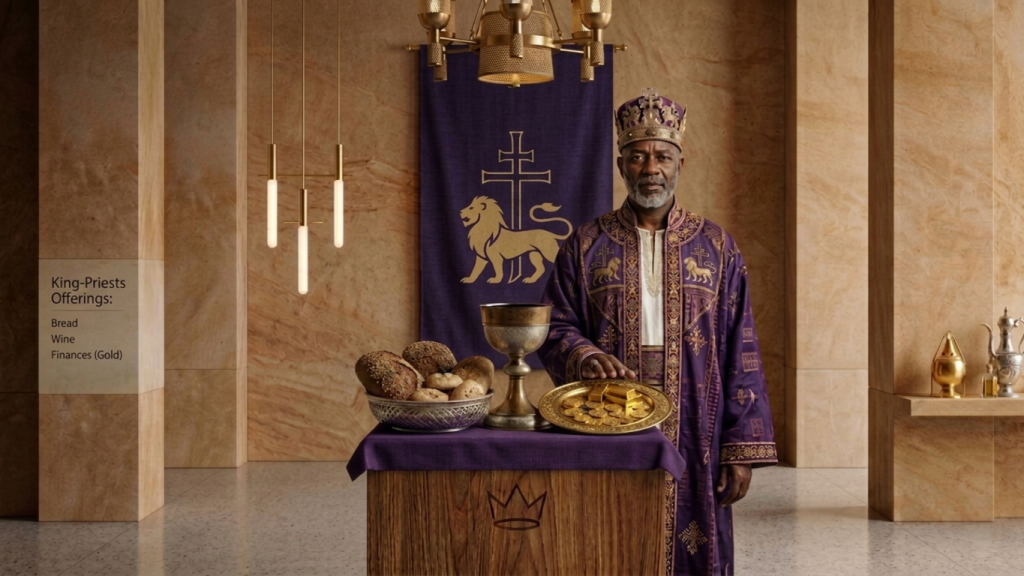
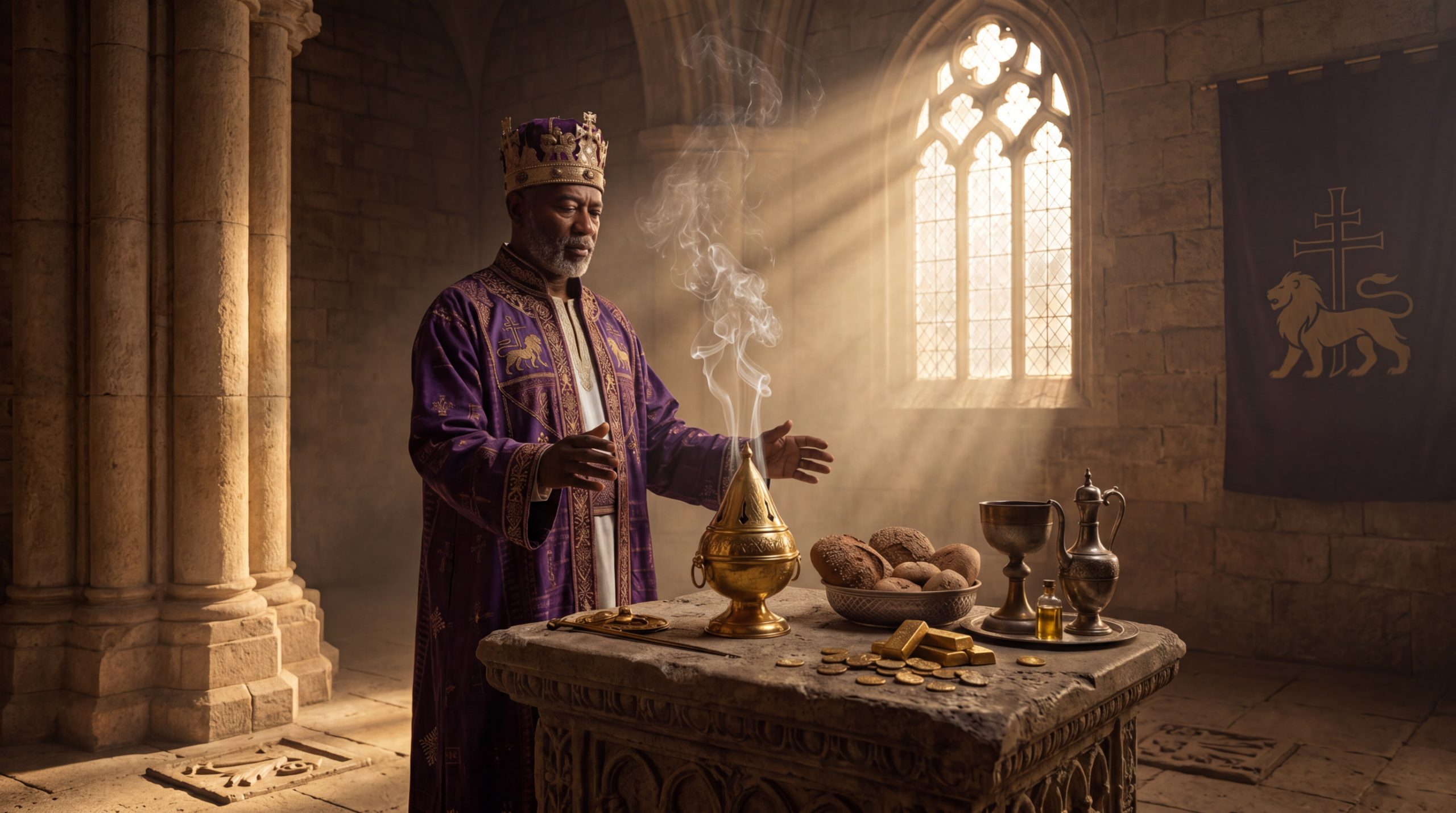
Bread, wine, gold, and incense are not four disconnected symbols; they form one picture of covenant partnership. Bread keeps you dependent on God’s presence. Wine keeps you filled with His Spirit and joined to His covenant. Gold keeps your resources surrendered to His purposes. Incense keeps your heart rising to Him in prayer and worship. Together they describe the everyday life of a King-Priest who has stopped dividing the sacred from the secular.
The invitation is to embrace that life on purpose: to live daily in covenant with God, to worship Him through both devotion and work, to build businesses that honor Christ, to steward resources faithfully, to remain dependent on the Holy Spirit, and to use your influence to advance His Kingdom in the marketplace. These four elements are not mere theology; they are practical realities that shape your leadership, your finances, your witness, and your daily work. Remember the covenant-first order: seek Him, and His wisdom, favor, and fruitfulness will follow. Bring your bread and wine, your gold and your prayers, to the table of the King-Priest — and let your work become worship.
Reflective Questions
Prayerfully evaluate how you are embodying these covenant principles in your business, leadership, finances, relationships, and daily work:
- Bread — Am I leading from daily intimacy with God, or running on yesterday’s manna and my own striving?
- Wine — Do I genuinely depend on the Holy Spirit for wisdom and creativity, or lean only on my natural ability and experience?
- Gold — Is my wealth a surrendered tool for God’s purposes, or has financial success quietly become a rival to my relationship with Him?
- Incense — Does an atmosphere of prayer, worship, and integrity accompany me into the workplace, or do I leave God at the office door?
- Covenant — Am I pursuing God’s blessing and anointing as ends in themselves, or am I pursuing Him — trusting that His wisdom, favor, and fruitfulness flow from the relationship?